

Quick links
- What Is Your Skin Barrier?
- What Is a Broken or Compromised Skin Barrier?
- Common Signs of a Broken Skin Barrier
- What NOT to Do When Your Barrier Is Damaged
- Barrier-Healing Ingredients to Look For
- The 5-Step Barrier Repair Routine
- How Long Does It Take to Heal a Damaged Barrier?
- Our Barrier Reset K-beauty Routine
What Is Your Skin Barrier?
Your skin barrier is the outermost layer of your skin. It’s also known as the skin moisture barrier.
Think of it like a protective wall that:
- Keeps moisture inside your skin
- Keeps irritants, bacteria, and pollution out
When your barrier is healthy, your skin feels:
- Comfortable
- Calm
- Balanced
What Is a Broken or Compromised Skin Barrier?
A broken skin barrier means that protective wall has tiny cracks.
This causes:
- Moisture to escape easily
- Irritants to get in more easily
That’s why your skin might suddenly freak out — even if you haven't changed much.
Common Signs of a Broken Skin Barrier
If you’re seeing any of these, your barrier might need some TLC:
- 🔴 Redness or stinging - especially after cleansing or applying products
- 😣 Products that used to work now burn - even “gentle” ones suddenly feel spicy.
- 😬 Sudden acne or bumps - your skin’s defence system is weakened.
-
😕 Tight but oily skin (SooBooJi skin) - dry underneath, overproducing oil on top to compensate.
What causes a damaged skin barrier (common triggers)
A damaged skin barrier usually happens when your skin is under stress for too long — until it suddenly becomes dry, irritated, or reactive.
Common causes include:
- Over-exfoliating (acids, scrubs, peeling gels too often)
- Using too many actives at once (retinol + acids + vitamin C, etc.)
- Harsh cleansers that leave your skin feeling tight or squeaky
- Cold weather / heating drying your skin out
- Stress + lack of sleep, which slows down skin healing
Barrier damage is often confused with purging.
Purging usually happens only when you start active ingredients like retinoids, exfoliating acids (AHA/BHA), or vitamin C, and it typically shows up as small breakouts in areas where you normally get acne.
If your skin feels stinging, burning, tight, or unusually sensitive, it’s more likely your barrier is compromised — not purging.
What NOT to Do When Your Barrier Is Damaged
When your skin is sensitised, doing less is often more helpful than doing more.
❌ Pause actives (for now)
- No acids, retinoids, vitamin C, exfoliating toners.
- Your skin needs rest, not stimulation.
❌ Don’t use hot water / steam your face
- Hot water or steam will irritate your skin even more.
❌ Stop chasing trends
- Layering 10 viral products won’t heal your barrier faster — it usually makes things worse.
❌ Don’t over-cleanse
- Cleansing too often or too harshly strips your skin even more.
Korean Skincare Ingredients That Help Heal a Broken Skin Barrier
One of the reasons Korean skincare works so well for barrier repair is because it’s built around one core philosophy:
healthy skin = a healthy skin barrier.
Instead of aggressively “treating” the skin with harsh actives, Korean skincare focuses on hydration, soothing ingredients, and strengthening the skin’s protective layer first — which is exactly what damaged skin needs.
If your skin is feeling irritated, tight, or reactive, these are the ingredients to look for.
⭐ Best Ingredients for Repairing a Damaged Skin Barrier
- 🧱 Ceramides
Ceramides are naturally found in your skin and act like the “cement” that holds your skin barrier together. When your barrier is damaged, ceramides help rebuild and strengthen it, reducing dryness and sensitivity over time.
- 💧 Panthenol (Vitamin B5)
Panthenol is one of the best ingredients for irritated skin. It helps calm redness, reduce discomfort, and support the skin’s natural healing process — especially if your skin feels tight or stingy.
-
🌱 Centella Asiatica (Cica)
Centella is a Korean skincare hero ingredient for sensitive skin. It’s known for soothing inflammation, reducing redness, and helping stressed skin feel calmer and more balanced.
-
🧈 Fatty Acids + Cholesterol
These ingredients work alongside ceramides to repair the barrier more effectively. Think of them as part of the “lipid layer” that keeps moisture locked in and prevents your skin from drying out.
-
🌿 Beta-Glucan
Beta-glucan is a deeply hydrating ingredient that’s especially great for sensitive or acne-prone skin. It helps reduce irritation while boosting moisture — without feeling heavy or greasy.
-
🫧 Glycerin
A simple but powerful humectant that draws water into the skin. Glycerin helps restore softness and reduces that “tight, stretched” feeling that comes with barrier damage.
-
🍃 Mugwort (Artemisia)
Mugwort is popular in Korean skincare for calming reactive skin. It’s especially helpful if your skin feels hot, irritated, or prone to inflammation.
🚫 Ingredients to Avoid While Your Skin Barrier Is Healing
When your barrier is compromised, it’s best to pause anything that can overstimulate the skin — even if it normally works well for you.
Avoid for 2–4 weeks (or until your skin feels stable again):
- Exfoliating acids (AHA/BHA/PHA)
- Retinoids / retinol
- Strong vitamin C (ascorbic acid)
- Peeling gels and scrubs
- High-fragrance products
- Overly drying clay masks
Once your skin feels calm and comfortable again, you can slowly reintroduce actives — one at a time.
✨ Barrier repair is about calming first, treating later
The goal isn’t to “fix everything at once.”
It’s to rebuild your skin’s natural protection so it becomes stronger, healthier, and more resilient long-term.
The 5-Step Barrier Repair Routine
You don’t need a 10-step routine to heal your skin — but you do need consistency. Tap each step to expand.
1Cleanse gently
When your barrier is damaged, cleansing should remove sweat and sunscreen without stripping your skin. A gentle cleanser helps by:
- Removing sweat, sunscreen, and pollution
- Protecting your skin’s natural oils
- Keeping your skin feeling comfortable (not tight or squeaky)
💡 Tip: If your cleanser leaves your skin feeling tight after washing, it’s probably too harsh.
2Hydrate
Damaged skin struggles to hold onto water, which is why it often feels tight, dry, or irritated. Hydrating toners and essences help by:
- Replenishing water in the skin
- Reducing tightness and flakiness
- Calming irritation and sensitivty
Hydration alone doesn’t repair the barrier — but it makes healing possible.
💡 Tip: Use 1–2 light layers of toner. More isn’t better if your skin is stinging.
3Treat (optional at first)
If your skin is very reactive, it’s okay to skip this step in the beginning.
Barrier-support serums and essences can help by:
- Soothes inflammation and sensitivity
- Supports skin recovery
- Strengthens the skin barrier over time
💡 Tip: Introduce this step only once your skin feels calmer.
4Seal
This is the most important step. A barrier cream helps lock in hydration and reinforce the lipid layer.
- Replaces missing lipids (ceramides, cholesterol, fatty acids)
- Strengthens weak points in the barrier
- Prevents moisture loss day and night
💡 Tip: Think of this as sealing cracks in a wall so moisture can’t escape.
5Protect (sunscreen)
UV exposure creates inflammation — even when you don’t burn — and damaged skin is more sensitive to it.
- Prevents further barrier damage
- Reduces redness and sensitivity
- Allows your skin to heal properly
💡 Tip: Without SPF, your skin is trying to repair itself while being damaged at the same time.
How Long Does It Take to Heal a Damaged Barrier?
Healing a damaged skin barrier isn’t instant — but the good news is that most people notice improvement fairly quickly once they stop irritating their skin.
In general:
- Mild barrier damage: 7–14 days
- Moderate barrier damage: 2–4 weeks
- More severe barrier damage: 4–6+ weeks
Your healing time depends on things like how long your barrier has been compromised, how often you’ve been exfoliating, and whether your skin is naturally sensitive.
The biggest mistake people make is restarting actives too soon. Even if your skin looks better after a few days, your barrier may still be rebuilding underneath.
The goal is to wait until your skin feels consistently calm — no stinging, no tightness, and no flare-ups.
Our Barrier Reset K-beauty Routine
Our minimalist routine to help your skin recover — without overloading it
When your skin barrier is damaged, the instinct to “fix it” with more products often makes things worse.
Redness, stinging, tightness, and sensitivity are signs that your skin needs less stress, not more steps.
This routine is designed as a temporary reset routine — to replace your existing skincare, strip things back to the essentials, and give your skin the right conditions to heal.
No harsh actives.
No unnecessary extras.
Just gentle, barrier-supportive care.
Shop our Barrier Reset Routine →
What This Routine Is (and Isn’t)
This is not a 10-step routine to layer all at once.
This is a guided, back-to-basics reset for sensitised or compromised skin.
You don’t need to introduce everything at the same time — and we don’t recommend that you do.
Instead, this routine gives you:
- The core essentials your skin needs during recovery
- Plus optional support steps you can introduce slowly, once your skin feels calmer
How to Use This Routine (The Reset Approach)
Step 1: Start Simple
Begin with just three steps:
- Gentle cleanser
- Barrier-repair moisturiser
- Sunscreen (AM only)
For many people, this alone is enough to reduce irritation and help the barrier stabilise.
Step 2: Add Support Gradually
Once your skin feels more comfortable — less tight, less stingy — you can slowly introduce:
- A hydrating toner to replenish moisture
- A barrier-focused essence or serum to support deeper repair
Add one product at a time, with a few days in between.
What’s Inside the Routine
Tap a step to see what it does and when to use it.
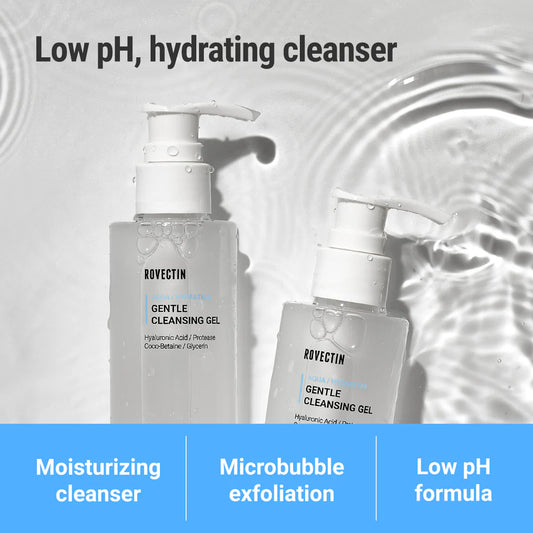
A low-irritation, non-stripping cleanser that removes impurities while helping to keep your skin barrier intact.
- Why it’s here: cleanses without the tight “squeaky” feel
- When to use: AM/PM
- Best for: sensitised, tight, reactive skin
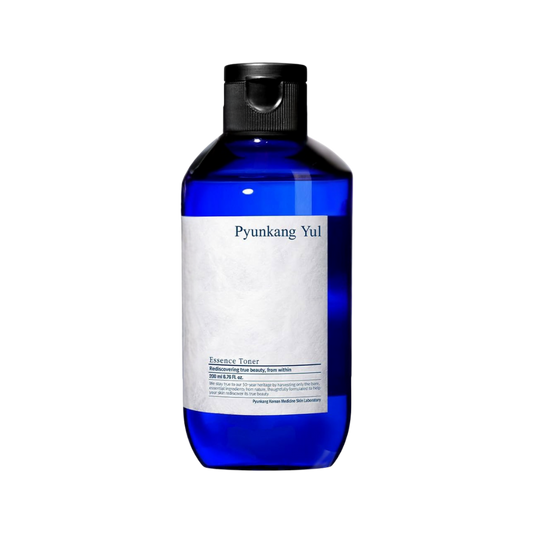
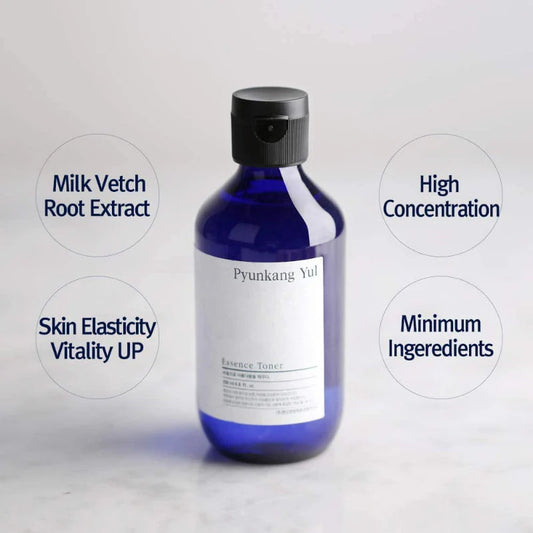
A gentle, minimalist toner made with Astragalus Root Extract (instead of water) to deeply hydrate, calm irritation, and support skin barrier recovery without overwhelming sensitive skin.
- Why it’s here: adds hydration without irritation
- When to use: after cleansing (AM/PM)
- Best for: dryness, tightness, redness
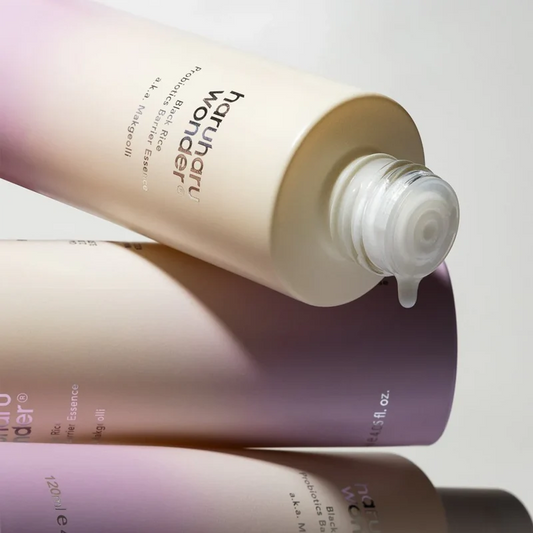
A nourishing essence formulated with probiotics to strengthen the skin barrier, improve resilience, and support long-term skin health.
- Why it’s here: supports recovery once your skin feels calmer
- When to use: after toner (PM or AM/PM if tolerated)
- Tip: introduce this last if you’re very reactive
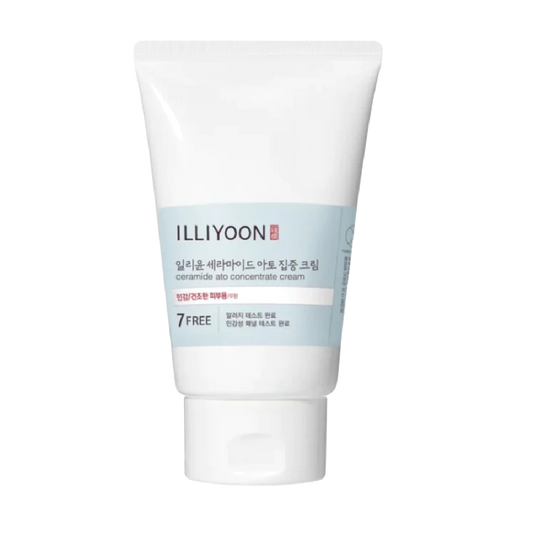
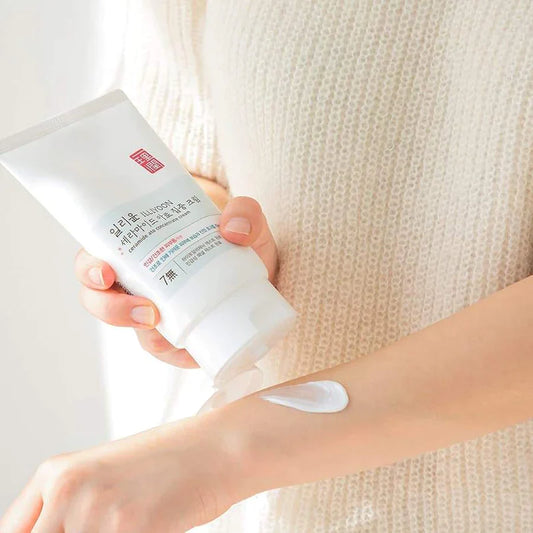
Rich in ceramides, this cream seals in hydration and reinforces the skin’s protective layer to help prevent dryness and irritation.
- Why it’s here: seals + strengthens the barrier
- When to use: AM/PM (generous at night)
- Best for: flaking, tightness, sensitised skin
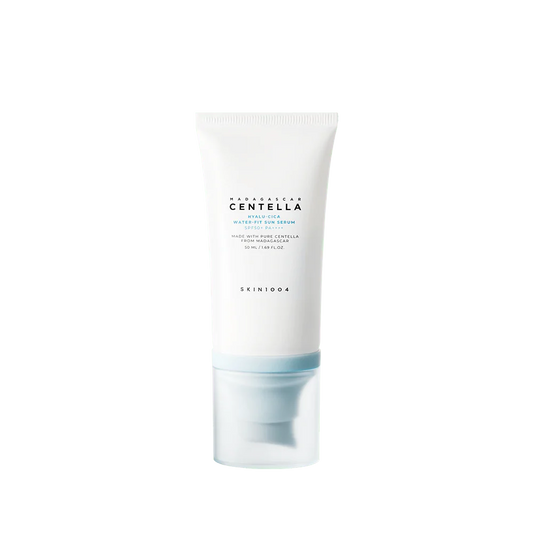
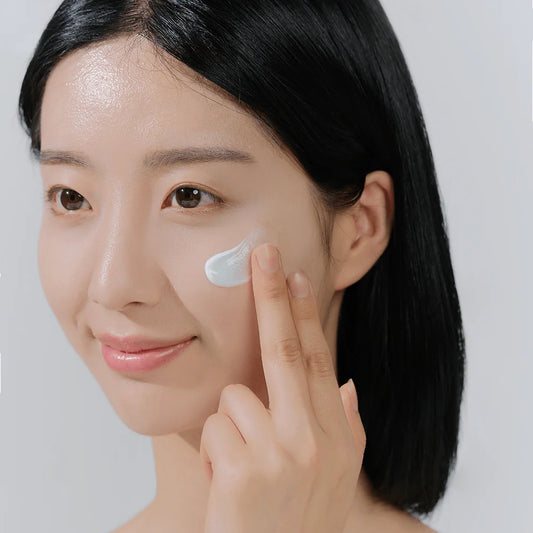
A lightweight, calming sunscreen that protects compromised skin from UV damage while delivering hydration and soothing care.
- Why it’s here: prevents ongoing inflammation so healing can happen
- When to use: every morning (reapply if possible)
- Best for: reactive skin that needs a comfy SPF
-
Aqua Hydration Gentle Cleansing Gel
Regular price From £7.50Regular priceUnit price per£15.00Sale price From £7.50Sale -
 Sold out
Essence Toner
Regular price From £0.00Regular priceUnit price per£5.00Sale price From £0.00Sold out -
Black Rice Probiotics Barrier Essence
Regular price From £6.50Regular priceUnit price per -
Ceramide Ato Concentrate Cream
Regular price From £4.99Regular priceUnit price per -
Madagascar Centella Hyalu-Cica Water-Fit Sun Serum
Regular price From £6.50Regular priceUnit price per£16.00Sale price From £6.50Sale


Who It’s For
✔️ This routine is for you if:
- Your skin stings or turns red easily
- You’ve over-exfoliated or overused actives
- You want a simple routine that actually helps
❌ It might not be for you if:
- You’re currently using strong actives daily
- You’re looking for instant acne treatment or exfoliation
Please note:
If your skin is severely damaged or very painful (for example, burning, cracking, or oozing), this routine may not be suitable during the acute healing phase. In these cases, it’s best to seek advice from a GP or dermatologist before introducing new skincare. Once your skin has settled, this routine can support ongoing barrier repair.
How Long Should You Try It For?
We recommend trying the Barrier Reset Routine for 2–4 weeks as a complete routine.
Most people notice:
- Less stinging within the first few days
- Less redness after 1–2 weeks
- More balanced, comfortable skin by week 3–4
If your skin barrier is more severely compromised, you may benefit from using the routine for longer before reintroducing active ingredients.
Healing takes time — but your skin will tell you when it’s happier.
Once your skin feels stable again, you can slowly reintroduce exfoliants or retinol — one at a time.
Start with the basics, stay consistent, and your skin will thank you.